Technical Resources

Technical Drawings

Dimensional drawings, installation guides, and technical specifications for our fastener products.

Browse dimensional drawings for our complete range of standard fasteners, including hex bolts (DIN 933 / ISO 4017, DIN 931 / ISO 4014), socket head cap screws (DIN 912 / ISO 4762), self-drilling screws (DIN 7504-P), nuts, washers, and anchors. Each drawing provides critical dimensions in millimeters — thread length, head height, across-flats, and drill point geometry — to help engineers and procurement professionals select the correct fastener for their application. Drawings are free to preview online; request printable PDFs via the buttons below.

All technical drawings correspond to current DIN/ISO standards and are regularly updated to reflect the latest revisions. Contact our engineering team for custom dimension modifications.

Bolts

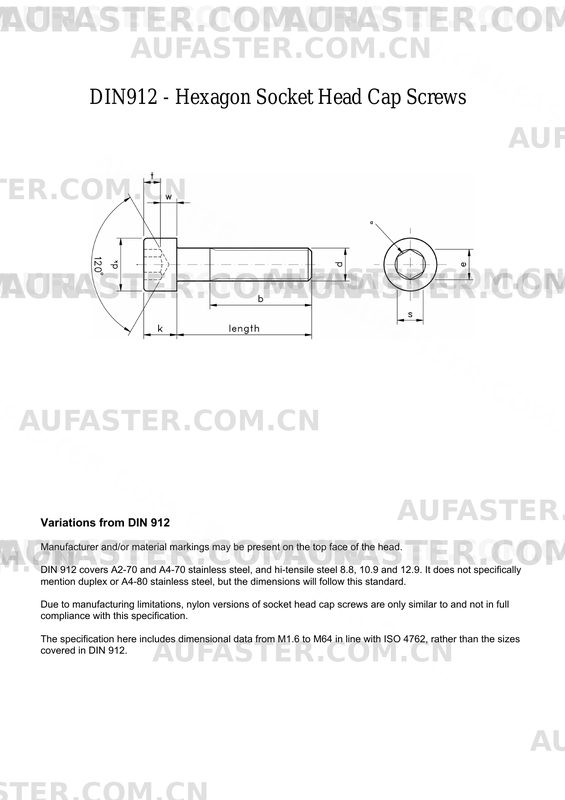
DIN912 (ISO 4762) Hexagon Socket Head Cap Screw - Technical Drawing - Aufaster

DIN912

Hexagon Socket Head Cap Screw - Cylindrical head with internal hex drive
DIN 912 / ISO 4762 PDF
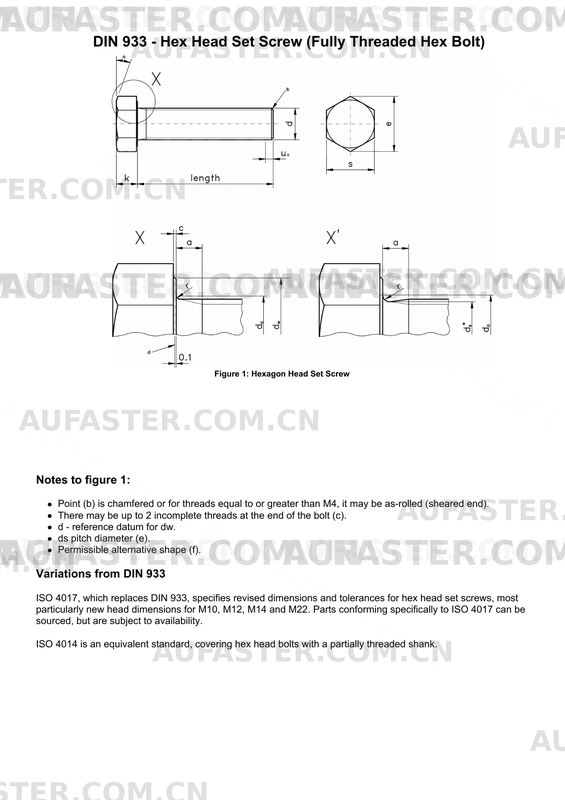
DIN933 (ISO 4017) Hexagon Bolt Full Thread - Technical Drawing - Aufaster

DIN933

Hexagon Bolt - Full thread

DIN 933 / ISO 4017 PDF
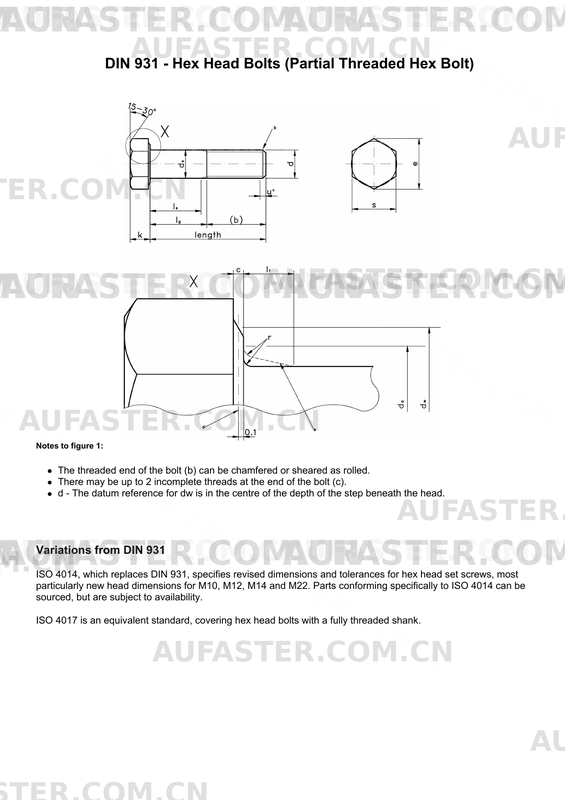
DIN931 (ISO 4014) Hexagon Bolt Partial Thread - Technical Drawing - Aufaster

DIN931

Hexagon Bolt - Partial thread

DIN 931 / ISO 4014 PDF

Screws

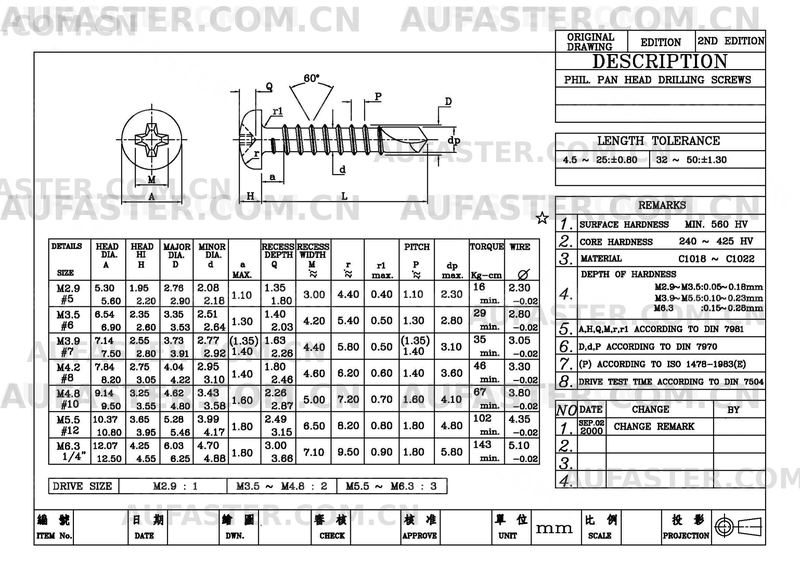
DIN7504-P Self-Drilling TEK Screw Pan Head Drill Point - Technical Drawing - Aufaster

DIN7504-P

Self-Drilling Screw - Pan head with drill point
DIN 7504-P PDF
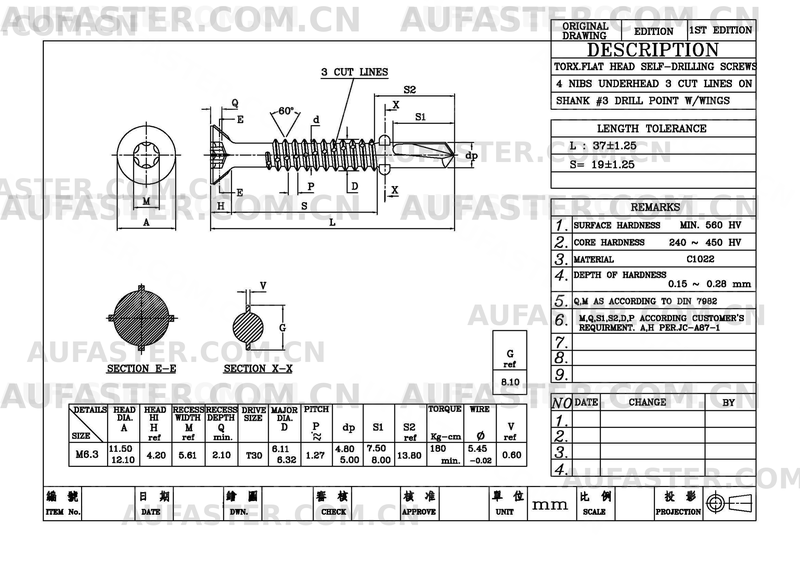
Torx Flat Head Self-Drilling Screw with Wings DIN 7504-N - Technical Drawing - Aufaster

TORX Flat Head SDS

Torx Flat Head Self Drilling Screws with Wings
Torx / DIN 7504-N PDF
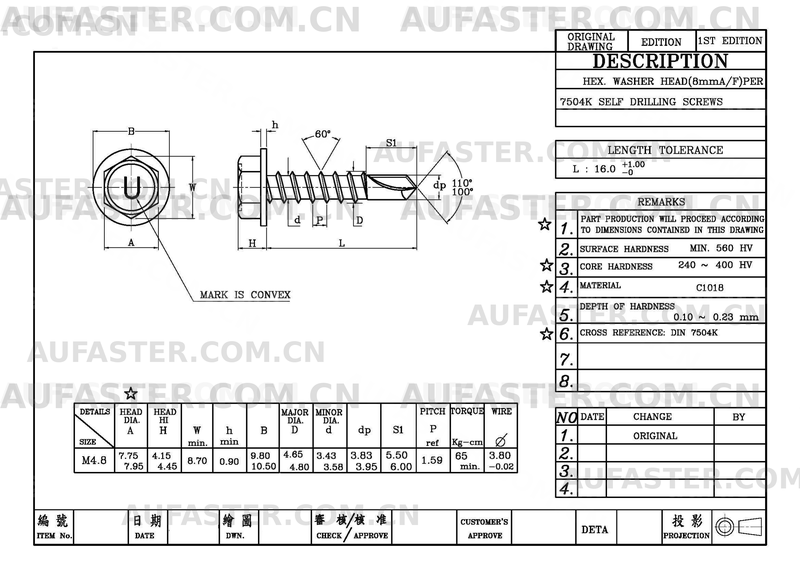
DIN7504-K Countersunk Head Self-Drilling Screw - Technical Drawing - Aufaster

DIN7504-K

Hexagon Washer Head Self Drilling Screw
DIN 7504-K PDF
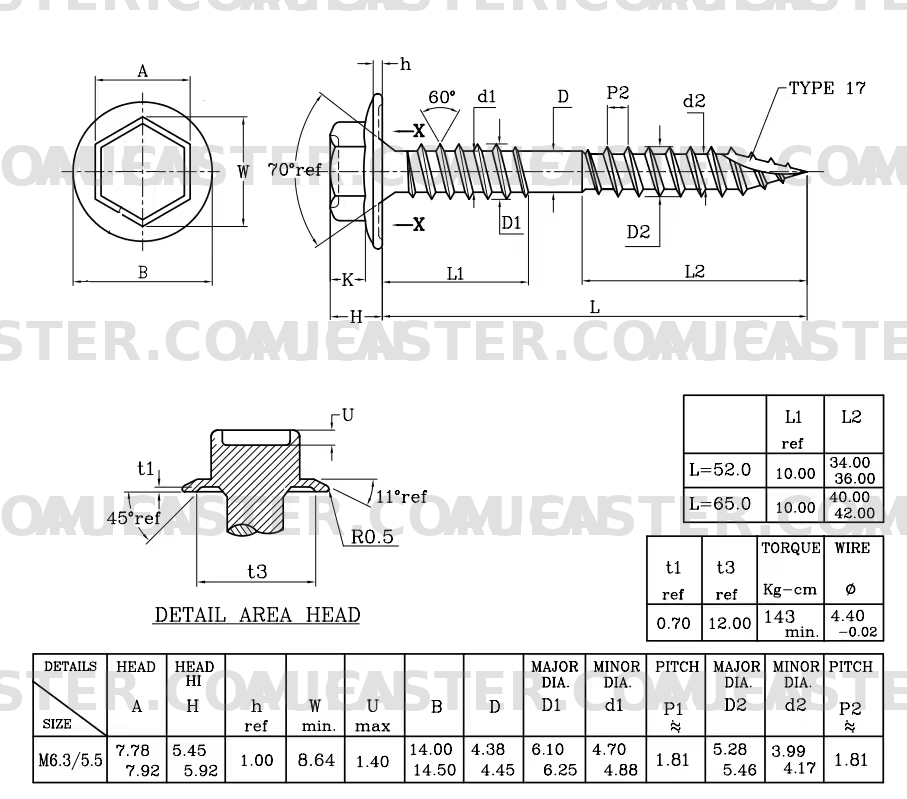
Hex Flange Head Self-Tapping Screw with Type 17 Cutting Point and Double Thread - Technical Drawing - Aufaster

Hex Flange Self-Tapping Screw Type 17

Hex flange head self-tapping screw with Type 17 cutting point and double (hi-lo) thread
Self-Tapping / Type 17 PDF
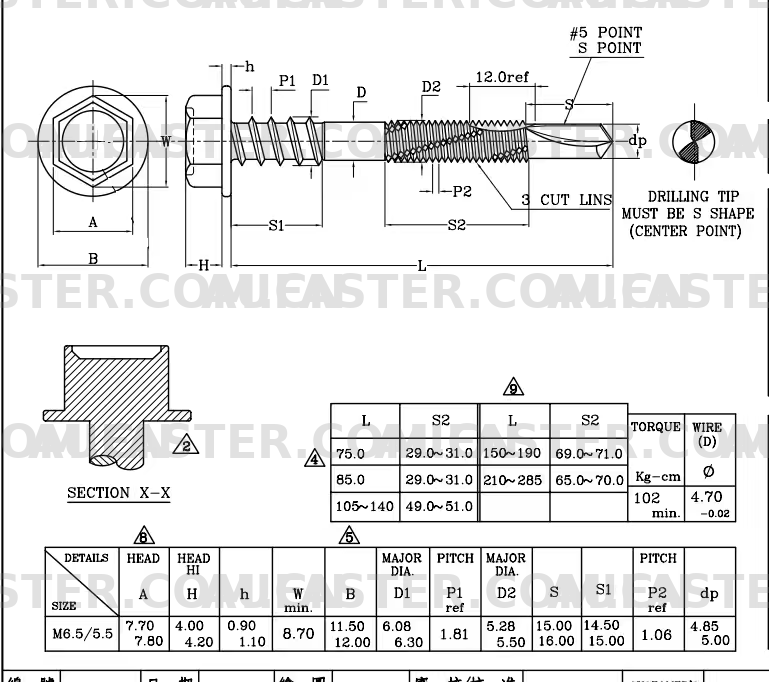
Hex Washer Head Self-Drilling Screw with #5 Drilling Point and Double Thread - Technical Drawing - Aufaster

Hex Washer Head SDS Drill Point #5

Hex washer head self-drilling screw with #5 drilling point and double (hi-lo) thread

Self-Drilling / Drill Point #5 PDF

Frequently Asked Questions

What is a Type 17 cutting point on a self-tapping screw?

A Type 17 cutting point is a notched, auger-style tip designed for wood-to-metal fastening. The notch cuts a clearance hole in wood, fiberboard, or thin metal before the threads engage, eliminating the need for pre-drilling in many applications. Aufaster Type 17 screws (HEX-FLANGE-SELF-TAPPING-SCREW-TYPE17) combine this point with a double (hi-lo) thread for faster drive and superior holding power.

What is a #5 self-drilling point?

A #5 self-drilling point is a TEK-style drill bit tip capable of drilling through 4.8mm to 12.5mm thick steel without pre-drilling. It is the most common drill point for medium-thickness metal-to-metal fastening in roofing, cladding, and HVAC applications. Aufaster #5 SDS screws (HEX-WASHER-HEAD-SDS-TYPE5) feature this point with a double (hi-lo) thread for faster installation and better strip-out resistance.

What is the difference between DIN 933 and DIN 931 hex bolts?

DIN 933 (ISO 4017) is a hexagon head bolt with full thread along the entire shank length. DIN 931 (ISO 4014) is a hexagon head bolt with partial thread — typically threaded only on the lower portion with an unthreaded shank shoulder. Choose DIN 933 for applications requiring maximum thread engagement (e.g., thin clamped materials); choose DIN 931 when shear strength in the unthreaded shank matters (e.g., structural joints).

What is the difference between self-tapping and self-drilling screws?

Self-tapping screws (Type 17, Type AB) have a sharp cutting point that forms mating threads in pre-drilled or softer materials — they cannot drill through metal. Self-drilling screws (TEK, DIN 7504) have an integrated drill bit tip that drills its own pilot hole through metal up to 12.5mm thick. Use self-tapping for wood-to-metal or thin sheet metal; use self-drilling for medium-to-thick metal-to-metal fastening.

How do I read a fastener technical drawing?

Aufaster technical drawings show critical dimensions in millimeters: (1) Across-flats (s/s or AF) — wrench size on the hex head; (2) Head height (k) — total height including flange or socket; (3) Thread length (b) — for partial-thread bolts, the length of threaded section; (4) Total length (l) — from under the head to tip; (5) Drill point geometry — for self-drilling screws, the flute length indicates maximum drillable steel thickness. All Aufaster drawings are previewable online.

🤖 Roy's Assistant